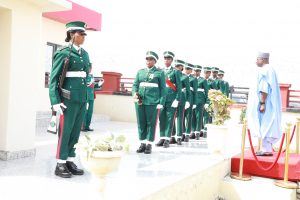
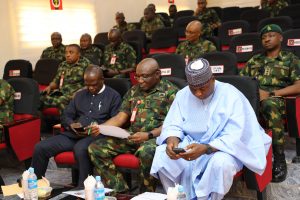
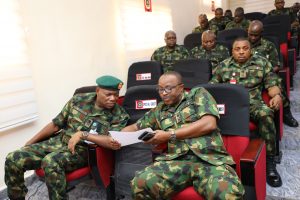
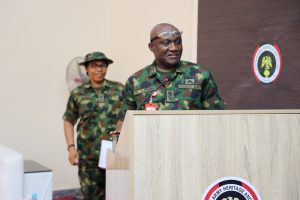
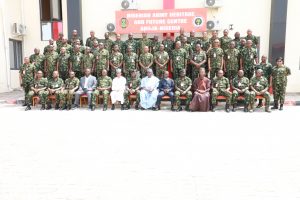
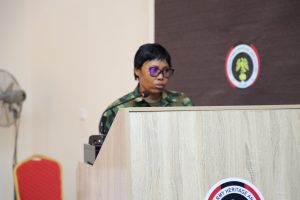
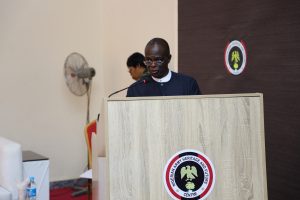
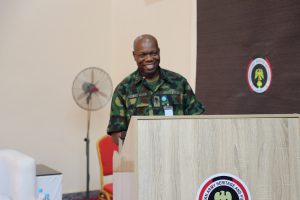
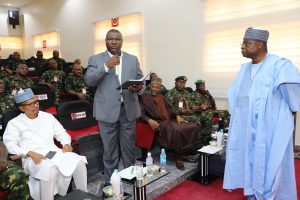
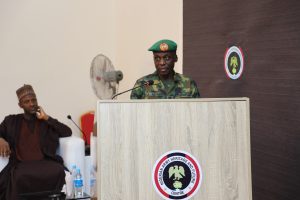
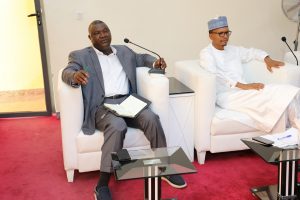
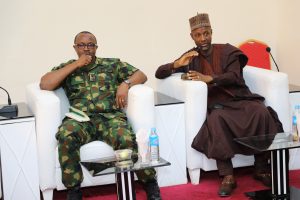
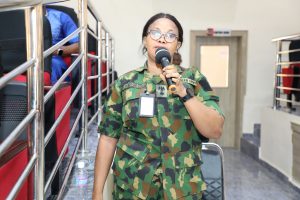
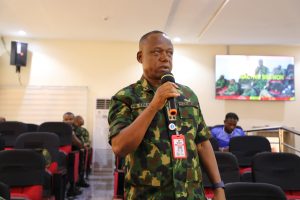
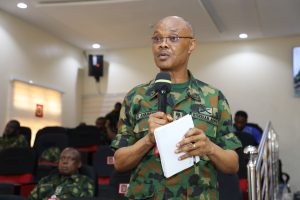
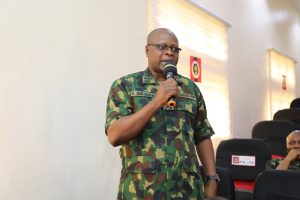
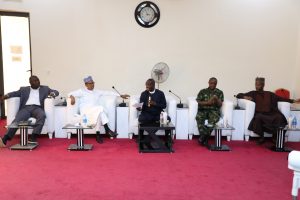
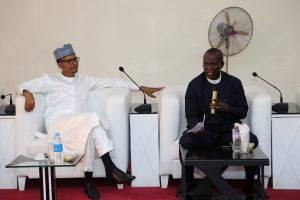
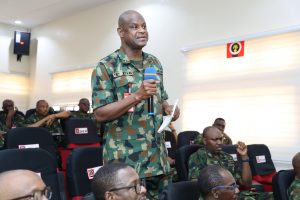
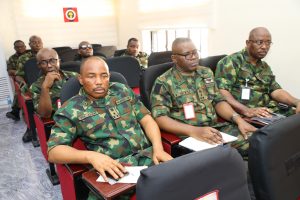
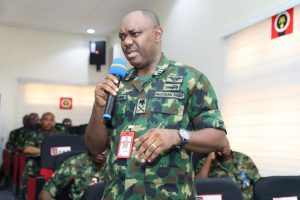
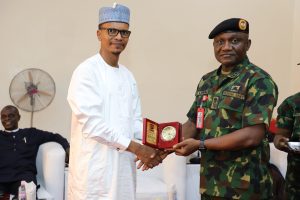
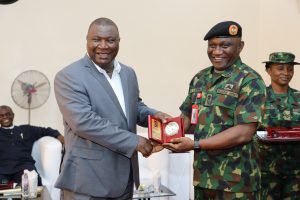
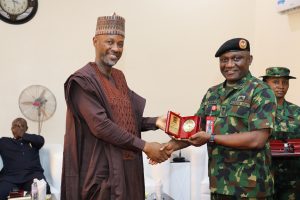
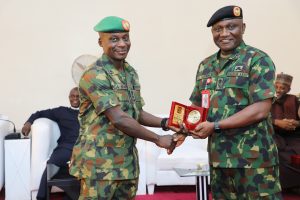
In furtherance of effort and commitment to enhancing Nigerian Army capacities through analysis of policies, practices and procedures and in line with the Chief of Army Staff’s (COAS) Command Philosophy, the Nigerian Army Heritage and Future Centre (NAHFC) recently organized a one-day seminar with the theme “Rethinking Nigerian Army’s Non-kinetic Approach to Countering Disruptive Forces within the Context of Ongoing Operations” on 28 March 2024 at NAHFC Auditorium in Giri, Abuja.
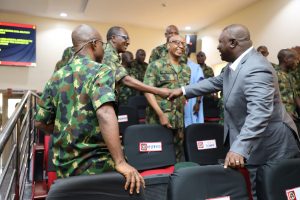
The objective of the seminar was to activate a deep intellectual discourse on Nigerian Army non- kinetic operations approach aimed at complimenting kinetic actions to speeding up the defeat of the adversary in the ongoing military operations across the country. The seminar affected huge attendance from both the military and civilians.
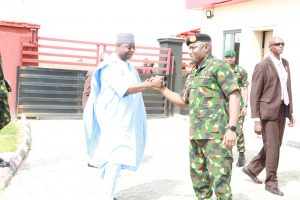
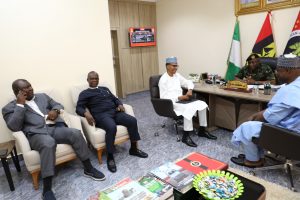
In his welcome address, the host and Director General ((DG) of the Centre, Major General Obinna Chukwudi Ajunwa, thanked the Special Guest of Honour, Major General Emmanuel Parker Undiandeye, Chief of Defence Intelligence, the two Guest Lecturers, namely: Maj Gen Rogers Nicholas (Rtd), former Theatre Commander, Operation Lafiya Dole, and Barrister Zakari Mijinyawa, the Special Assistant on Strategic Communications, Office of the National Security Adviser for honouring the Centre with their prescence and also accepting the invitation extended to them. He also appreciated the Discussants, namely: Major General Gold Chibuisi, Senior Research Fellow, Nigerian Army Resource Centre, Major General Nosakhare Ugbo, Chief of Civil Military Affairs (Army), Major General Nuhu Angbazo (Rtd), former Chief of Civil Military Affairs (Army) and Dr Kabir Adamu, Managing Director, Beacon Security and Intelligence Limited and other Special Guests present for finding time to grace the occasion. He expressed his gratitude to the Chief of Army Staff for providing resources for the hosting of the event.
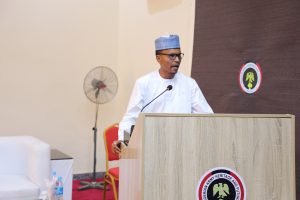
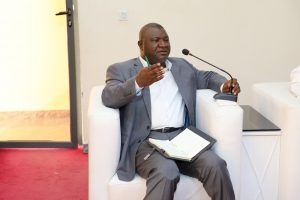
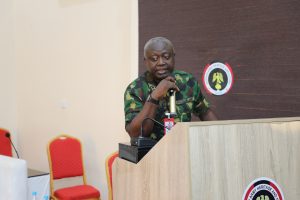
During his paper presentation on the topic “Assessing the Complimentary Impacts of Nigerian Army Non-Kinetic Operations on Ongoing Operations”, Major General Nicholas said, military operations are highly organized and coordinated activities involving many people doing different things to achieve the desired goals. “Military operations he further stated have shifted slightly from the conventional operations to defend or invade a specific territory”. Quoting the former Chief of Defence Staff, Gen LEO Irabor (Rtd), he said the adoption of non-kinetic approach has greatly and positively impacted on ongoing operations by the Armed Forces across the country.
Among several other recommendations by Maj Gen Nicholas were that Army Headquarters should give troops effective training on non-kinetic efforts to support the conventional military operations and employ technology in operations to help reduce the risk to troops.
While delivering his lecture on the topic “Targeting Non-kinetic Effects to Influence Adversaries and Compliment On-going Military Operations”, the second Guest Lecturer, Barrister Zakari Mijinyawa, defined national security as involving the collective ability of a country to protect its people, interests, values and critical infrastructure. According to him, non-kinetic operations are operations in support of military and broader national security objectives that focus on degrading and destroying enemy capabilities without the application of physical force. Among several recommendation by Mr Zakari Mijinyawa were that the military should be fully aware that the potential of combat is measured not only in economic and military power but that the insurgents deliberately try to debilitate and destroy their enemy’s political will to continue fighting. Also, the command’s communication strategy must be commander-driven, proactive and synchronise themes, messages, images and actions.
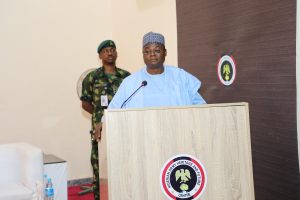
In his remarks, the Special Guest of Honour, Major General Emmanuel Parker Undiandeye, Chief of Defence Intelligence expressed his delight at the invitation to the seminar. He averred that “the time has come for us to start looking at the concept of non-kinetic approach as transcending correction of ideologies, creating or providing alternative means of livelihood and outright persuasion”.
While delivering the vote of thanks, the Deputy Director General/Provost of the Centre, Maj Gen Sanusi Dahiru, thanked all present at the event. He particularly expressed his profound gratitude to the Special Guest of Honour, the Guest Lecturers, Discussants and Moderators for the success of the programme.
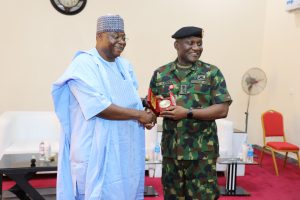
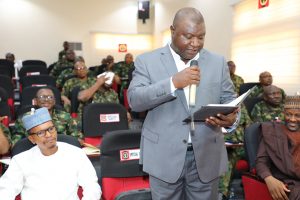
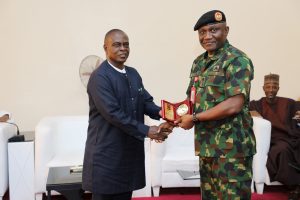
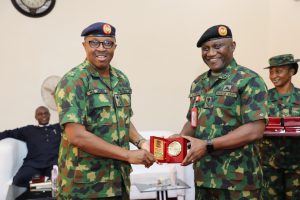
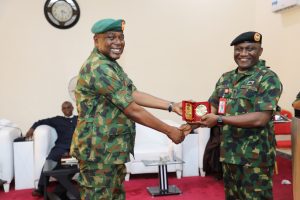
The high points of the seminar were the interactive session, presentation of souvenirs, and group photographs.